
The advantages of working with a labour hire partner come down to control and reliability, not just access to workers.
When site managers in Melbourne or Sydney face sudden shifts in demand—like needing 50 qualified high-reach forklift operators within a week—traditional recruitment pipelines collapse under the pressure. Without a partner who can integrate real-time skill verification, WH&S compliance checks, and culture fit assessment directly into their workflow, operations managers end up firefighting no-shows, safety incidents, and productivity lags.
Labour hire partners who operate with deep operational knowledge provide more than just a roster of candidates; they manage the entire staffing lifecycle—from pre-shift safety inductions to post-deployment performance checks—aligned tightly with site scheduling and project milestones. This means less downtime caused by administrative delays, fewer workplace injuries due to inadequate screening, and smoother handling of peak load periods without communication breakdowns. Those loose ends often turn fixed labour costs into lost productivity expenses.
This article discusses how partnering strategically with a labour hire provider reduces hidden costs associated with turnover, mitigates WH&S liabilities through accredited screening, and supports project continuity by delivering rigorously assessed candidates ready to slot into complex operational demands.
You’ll gain a clearer understanding of the behind-the-scenes processes that differentiate reliable labour hire solutions from transactional models, allowing for staffing that actually supports sustained site performance and safety compliance across demanding industrial, logistics, and construction environments.
Hidden Operational Risks
One of the less obvious challenges when engaging a labour hire partner lies in the latent operational risks that can quietly erode productivity and safety compliance across industrial and construction sites. Even with a strategic recruitment approach, these risks often stem from coordination gaps and process mismatches between client sites and labour hire providers that only surface over time. Understanding these hidden failure points requires dissecting day-to-day site workflows and how labour hire integrates—or fails to—within them.
Fragmentation of Workforce Integration
When site managers onboard labour hire workers, a common pitfall is incomplete integration into existing site processes. For instance, temporary workers frequently arrive lacking detailed knowledge of site-specific safety protocols and operational nuances, even when induction sessions are conducted. This partially stems from the reliance on the labour hire provider to deliver generic inductions remotely or in group settings, which can gloss over critical site-specific risks such as uneven floor surfaces, traffic routes for heavy machinery, or proper lockout/tagout procedures.
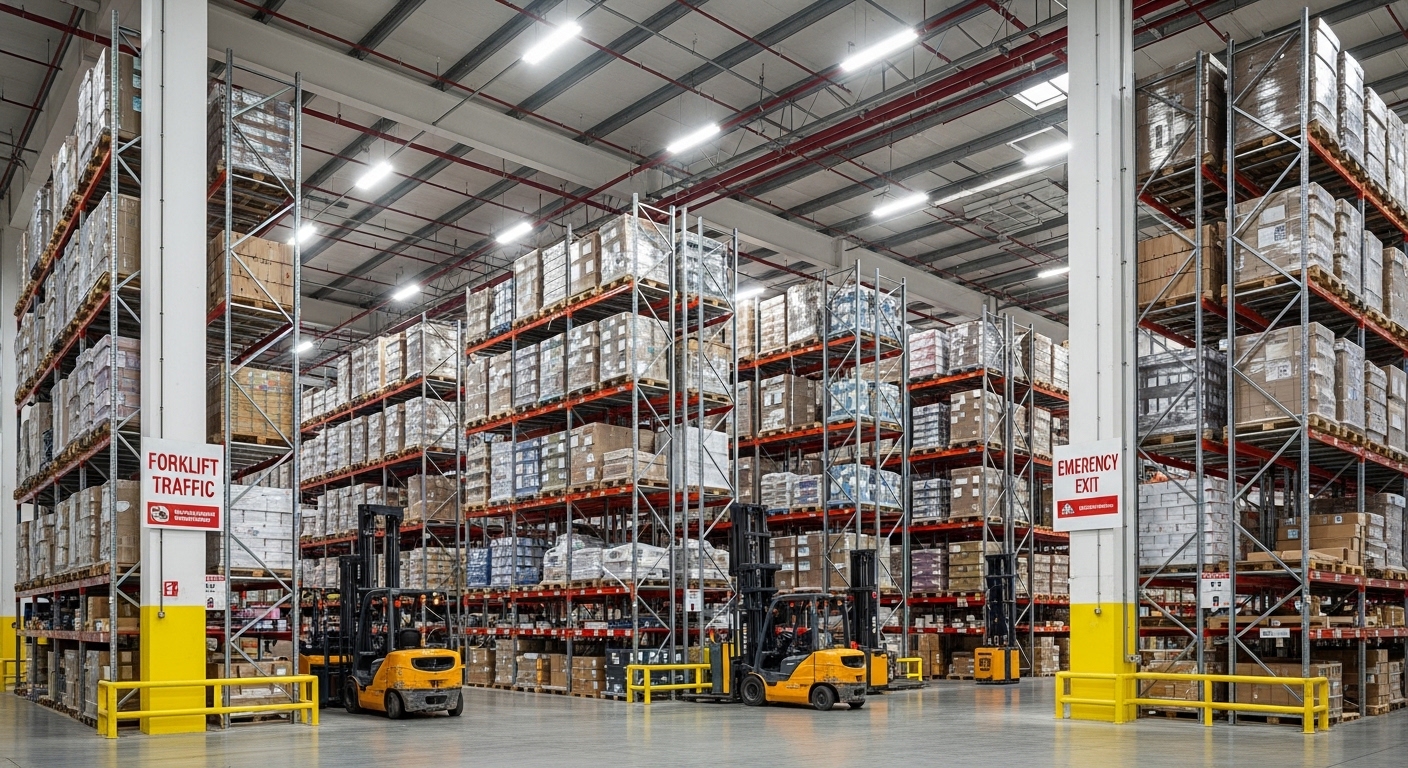
Operationally, this disconnect might seem minor at first, but it manifests in time lost through repeated safety briefings, increased supervision requirements, and in worst cases, near-misses or incidents. For example, on a Melbourne logistics warehouse floor with high forklift traffic, a labour hire worker unfamiliar with designated pedestrian walkways can inadvertently create safety hazards that disrupt throughput and require immediate corrective action from site supervisors.
Variability in Skill and Fitness for Task
Many labour hire arrangements focus on the availability and certifications of candidates but do not rigorously validate specific skill matchor physical fitness for demanding tasks. This introduces variability into how effectively workers can perform critical roles, impacting cycle times and quality outputs.
A Brisbane construction site requiring civil labourers to operate high reach forklifts illustrates this well. Here, not only must workers hold the proper licensing, but they must also demonstrate practical competency with site-specific machinery under tight timelines. Labour hire pools with insufficient experiential filters increase the probability of placing workers unable to meet pace or precision needs, resulting in workflow bottlenecks and increased supervisory burden. This reduces overall operational efficiency and lengthens project timelines.
Communication Gaps under Dynamic Conditions
Operational environments in industrial and construction sectors are rarely static; sudden changes like urgent order surges, equipment failures, or weather delays stress labour coordination. Labour hire partners failing to maintain real-time communication with site leadership create blind spots. This can translate into staffing mismatches where surplus labour is underutilized, or worse, critical roles remain unfilled during peak demand windows.
For example, a Sydney warehouse experiencing a last-minute high-volume shipment must quickly scale its picker workforce. Without direct, up-to-the-minute labour availability updates, site managers may over-rely on internal staff overtime or scramble for emergency hires, neither of which is cost or compliance optimal. The lag between site needs and agency response often results in productivity losses measurable in hours or even days, a serious risk for time-sensitive operations.
Hidden Costs from Underestimating Turnover Impact
Turnover rates represent a conspicuous cost driver, but their ripple effects often remain underestimated. Frequent replacement cycles create multiple layers of hidden administrative and operational expense beyond simple pay rates. These include increased onboarding time, repeated site-specific training, induction compliance documentation, and reduced team cohesion.
An industrial site in Brisbane employing a rotating pool of casual labour often sees a 15-20% monthly turnover rate. Each new hire requires at least half a day's dedicated induction and familiarization time, frequently supervised by senior team leads whose presence is critical on active workflow zones. This diversion of skilled resources compounds operational delays and can reduce overall site throughput by as much as 10% when calculated over a quarterly horizon. The impact is more immediate and acute when skilled trades like boilermakers or forklift operators rotate frequently—the downtime associated with finding and qualifying replacements delays project milestones.
Liability and Compliance Blind Spots
Although labour hire providers may conduct pre-employment screenings such as drug testing and background checks, compliance does not guarantee seamless operational safety without ongoing oversight. For example, delays in receiving screening results or misalignment in WH&S record-keeping between provider and client can leave sites vulnerable to lapses unnoticed until an incident occurs.
In practice, some sites have observed that drug screening results were not consistently updated within site databases, leading to labourers working before clearance was formally recorded. This exposes sites to potential regulatory penalties and insurance risks, underscoring that operational risk mitigation involves continuous vigilance and process synchronization, not just initial screening.
Sample Operational Scenarios
Scenario 1: A logistics site on Sydney’s fringes faces a forklift-pedestrian near-miss due to a labour hire worker missing a critical site-specific traffic briefing. The site must halt operations and conduct an urgent safety stand-down, costing 2 hours of lost productivity and an immediate review of onboarding procedures.
Scenario 2: A construction project in Melbourne delays foundation works by 3 days because incoming labour hire civil operatives lacked practical machinery handling experience. The reallocation of experienced crews to cover training extends project timelines and inflates labor costs.
Understanding these hidden operational risks is crucial for site leaders looking beyond headline services to the intricate, real-world effects of labour hire partnerships on their daily workflows and safety standards. It underscores that cost and compliance benchmarks must integrate deeply with on-the-ground coordination to avoid costly failures and lost production.
Conclusion
Partnering with a labour hire provider built around operational rigor and strategic alignment transforms how staffing challenges impact site productivity and safety. Beyond just filling roles, it’s about embedding a workforce solution that respects the complex workflows, safety requirements, and fluctuating demands characteristic of industrial, logistics, and construction environments. Effective labour hire partnerships don’t just react to immediate needs—they shape workforce reliability through consistent screening, cultural fit assessment, and real-time communication during critical phases.
The real value emerges when labour hire becomes an extension of site operations rather than a transactional vendor. This means acknowledging that turnover and “no-shows” aren’t mere inconveniences but operational disruptions that cascade into lost output and heightened WH&S exposure. A partner who integrates risk mitigation and tailored recruitment into daily workflows creates staffing continuity that aligns with project timelines and safety protocols, not just headcount targets.
At the core, labour hire success hinges on prioritising workforce quality over quantity—choosing candidates who will perform and stay, not just those who can perform. Sites that achieve this understand staffing as a dynamic system dependent on ongoing evaluation, timely responsiveness, and a nuanced grasp of workplace culture and compliance pressures. The principle worth retaining is that optimal staffing is never “set and forget.” It demands continuous operational integration to anchor workforce stability amid shifting project and safety complexities.